Browser-based services
Deliver customer portals, internal platforms, and digital products without desktop installation.
Cloud-based web application development
Give customers and teams dependable browser access while keeping deployment, monitoring, security, and change visible to the people responsible for the product.
PhaneLabs selects cloud architecture after the workload and operating model are understood, not because complexity looks impressive on a diagram.

What the cloud should enable
The architecture should support how people access the product, how demand changes, what data must be protected, and who will operate it after release.
Deliver customer portals, internal platforms, and digital products without desktop installation.
Automate repeatable deployment while keeping approvals, rollback, and release evidence appropriate to risk.
Make errors, performance, usage, and service dependencies observable enough for responsible support.
Architecture decisions
Plan around expected traffic, peaks, background work, storage, and response-time needs rather than an abstract promise of infinite scale.
Define users, roles, tenant boundaries, sensitive information, retention, backup, and recovery expectations.
Assess existing systems, external APIs, failure behavior, rate limits, and ownership before committing to a connection.
Make infrastructure choices, environments, monitoring, support, and vendor dependencies visible in the operating plan.
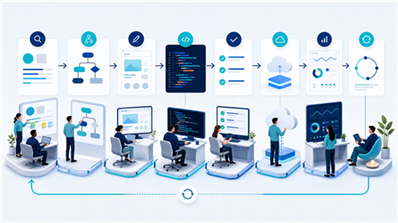
Design for the day after launch
Someone still owns access, data handling, releases, incident decisions, dependencies, cost review, and product change. We bring those responsibilities into discovery so the application is operable as well as deployable.
The result should be understandable: what runs where, how it is observed, how it is recovered, and what your team or support partner must maintain.
Delivery path
Map journeys, workload, data, integration, resilience, and ownership needs.
Choose a proportionate structure, environments, access model, and deployment path.
Build product increments with testing, infrastructure, observability, and review together.
Launch with monitoring, recovery, documentation, responsibilities, and a change backlog.
PhaneLabs maps service boundaries, data movement, recovery paths, cost drivers, and operational ownership before committing to a cloud design.
Common questions
No. A well-structured single application can be easier and less expensive to operate. Service separation should follow real scaling, ownership, or isolation needs.
Often, but the right path depends on its architecture, data, dependencies, downtime tolerance, and the reason for moving. Assessment should precede migration promises.
They can be modeled from expected usage and architecture, then monitored after release. Actual cost depends on traffic, storage, data transfer, managed services, and operating choices.
Build for the operating reality
Share the product, users, data, integrations, and reliability expectations. We will help turn them into a proportionate delivery and operating plan.