Who must accomplish what?
Roles, journeys, accessibility, devices, and exception paths determine interface and permission work.
Cost of web application development
A credible estimate is not produced from a page count or a generic package. It comes from understanding the users, workflows, integrations, data, quality requirements, and release that will make the application useful.
This guide shows what changes scope and where early decisions can protect the budget without removing the value the product needs.

The main cost drivers
Every factor should connect to a business need or a risk that must be controlled. Complexity without value should not survive prioritization.
Roles, journeys, accessibility, devices, and exception paths determine interface and permission work.
Approvals, calculations, states, notifications, and edge cases affect design, implementation, and testing.
APIs, legacy tools, identity, payments, and unreliable external dependencies introduce integration effort.
Migration, quality, retention, privacy, auditability, and recovery change both scope and risk.
Availability, performance, security, testing, and review depth should match the consequences of failure.
Hosting, monitoring, support, documentation, handover, and planned improvement belong in the investment view.
Control the first release
A smaller release should still solve a recognizable user problem from beginning to end.
Prototype uncertain flows and investigate risky integrations before treating them as committed features.
Not every record, report, or historical behavior must move on the first day if a safe transition is possible.
Security, accessibility, reliability, and maintainability are not polish to add after the feature budget is spent.
Why no universal price appears here
Two applications with similar screens can carry very different migration, integration, security, and reliability requirements. Publishing a universal price would hide those differences.
After a short discovery, an estimate should state what is included, the assumptions it relies on, the risks that could change it, and which decisions remain open.
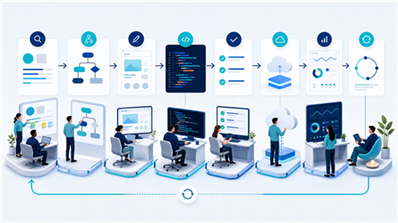
How estimation becomes clearer
Describe the problem, users, current process, deadline drivers, and known constraints.
Map the critical journey, dependencies, data, risks, and acceptance needs.
Define the smallest useful release and separate later opportunities.
Present scope, assumptions, delivery approach, investment, and ownership considerations together.
PhaneLabs frames estimates around scope, uncertainty, delivery stages, integration needs, quality expectations, and the ownership required after launch.
Common questions
A feature list can start the conversation, but a responsible estimate also needs user journeys, integrations, data, quality expectations, and assumptions.
A fixed budget can be workable when scope, assumptions, responsibilities, and change handling are sufficiently clear. Discovery reduces the uncertainty before that decision.
Hosting, third-party services, monitoring, maintenance, support, security updates, and product improvement vary with the application and operating model.
Turn an idea into an estimable release
Share the workflow, users, systems, and constraints you already know. We can help identify what still needs to be learned before a credible estimate is possible.