A bounded first opportunity
A useful starting slice can cover the journey in which people select deliverable items and then obtain restaurant acceptance, for one accountable user group, with exceptional cases still visible.
Service opportunity
Coordinate menu availability, ordering, kitchen acceptance, courier assignment, delivery, and service recovery across several parties.
Food Delivery Application Development should begin with a concrete problem for commerce, fulfilment, and customer-service teams. The technology matters, but only after the workflow, constraints, and desired change are understood. A useful first conversation includes people represented by the role label “customer”, a review of how people select deliverable items, and evidence about orders accepted without manual repair.
Service opportunity
Coordinate menu availability, ordering, kitchen acceptance, courier assignment, delivery, and service recovery across several parties. The points below change with this specific product context; they are not a generic promise that software is always the answer.
A useful starting slice can cover the journey in which people select deliverable items and then obtain restaurant acceptance, for one accountable user group, with exceptional cases still visible.
The information involved in service-area and menu rules needs authoritative sources, permitted users, retention rules, and correction paths. The interface cannot compensate for records nobody owns.
Connections involving the systems described as “restaurant order system” and “mapping and routing service” need explicit contracts, timeouts, reconciliation, monitoring, and responsible teams when one side is unavailable.
Consider both orders accepted without manual repair and pickup wait variance when assessing the operating hypothesis. Define the baseline before development if the value case depends on improvement.
People and responsibility
A role belongs in discovery because it performs, governs, supports, or is affected by the workflow. Involving these perspectives early exposes competing definitions of success.
People represented by the role label “customer” supply real examples of how people select deliverable items. This helps the team decide when an order becomes committed without reducing the role to a permission label.
Invite people represented by the role label “restaurant operator” to review scenarios in which people submit and pay through an approved flow. Ask them to help decide who may change the delivery promise and preserve disagreements as product evidence.
The role label “courier or dispatcher” represents people who experience or own the consequences when people obtain restaurant acceptance. Their acceptance examples clarify how substitution consent works before the workflow is automated.
People represented by the role label “support colleague” bring operating context to the moment when people prepare and dispatch. Include them when deciding which location history is actually needed, especially for exceptional cases.
Workflow anatomy
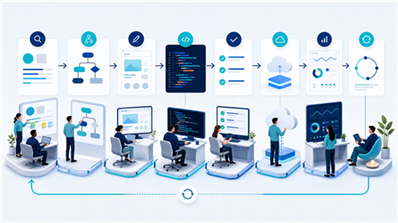
The sequence below is a discovery hypothesis. Map actual triggers, information, decisions, waiting time, and exceptions with the people responsible before turning it into scope.
Treat the moment when people select deliverable items as a state change that should be visible to the next responsible role. Test the candidate capability “service-area and menu rules” in a scenario involving unavailable items sold, then observe orders accepted without manual repair.
When people submit and pay through an approved flow, the product must make ownership and the next valid action clear. Evaluate the candidate capability “restaurant acceptance timer” against a scenario involving preparation estimates treated as guarantees; pickup wait variance can help test the result.
Treat the moment when people obtain restaurant acceptance as a state change that should be visible to the next responsible role. Test the candidate capability “preparation and pickup milestones” in a scenario involving unsafe courier incentives, then observe support contacts per failed delivery.
When people prepare and dispatch, the product must make ownership and the next valid action clear. Evaluate the candidate capability “courier handoff” against a scenario involving location privacy; refunds reconciled to order cause can help test the result.
Treat the moment when people confirm delivery or resolve a failure as a state change that should be visible to the next responsible role. Test the candidate capability “refund or redelivery case” in a scenario involving refunds disconnected from order and payment state, then observe orders accepted without manual repair.

A concrete prototype brief
Prototype a sequence in which people submit and pay through an approved flow and then obtain restaurant acceptance. Include the candidate capability “service-area and menu rules”, exchange only the minimum information required by the system described as “restaurant order system”, and make a scenario involving unavailable items sold visible.
Review the concept with representatives of the role labels “customer” and “restaurant operator”. The prototype should help answer the question “when an order becomes committed” and produce evidence useful enough to narrow scope, choose another approach, or stop.
Product capability
These are candidate responsibilities for Food Delivery Application Development, not a fixed package. Each must earn its place by improving a named workflow moment without creating disproportionate ownership.
The candidate capability “service-area and menu rules” can support the moment when people submit and pay through an approved flow. Define what information comes from the system described as “restaurant order system”, and test a scenario involving unsafe courier incentives before accepting the capability.
The candidate capability “restaurant acceptance timer” can support the moment when people obtain restaurant acceptance. Define what information comes from the system described as “mapping and routing service”, and test a scenario involving location privacy before accepting the capability.
The candidate capability “preparation and pickup milestones” can support the moment when people prepare and dispatch. Define what information comes from the system described as “approved payment provider”, and test a scenario involving refunds disconnected from order and payment state before accepting the capability.
The candidate capability “courier handoff” can support the moment when people confirm delivery or resolve a failure. Define what information comes from the system described as “courier and customer notifications”, and test a scenario involving unavailable items sold before accepting the capability.
The candidate capability “refund or redelivery case” can support the moment when people select deliverable items. Define what information comes from the system described as “restaurant order system”, and test a scenario involving preparation estimates treated as guarantees before accepting the capability.
System boundaries
A connection is a shared operating responsibility. For Food Delivery Application Development, discovery should name the authoritative source, permitted direction, latency, failure behaviour, test access, and reconciliation owner.
A connection with the system described as “restaurant order system” may provide or receive information for service-area and menu rules. Document identifiers and state transitions, then decide how the team detects a scenario involving unavailable items sold, contains its impact, and recovers without silently losing work.
A connection with the system described as “mapping and routing service” may provide or receive information for restaurant acceptance timer. Document identifiers and state transitions, then decide how the team detects a scenario involving preparation estimates treated as guarantees, contains its impact, and recovers without silently losing work.
A connection with the system described as “approved payment provider” may provide or receive information for preparation and pickup milestones. Document identifiers and state transitions, then decide how the team detects a scenario involving unsafe courier incentives, contains its impact, and recovers without silently losing work.
A connection with the system described as “courier and customer notifications” may provide or receive information for courier handoff. Document identifiers and state transitions, then decide how the team detects a scenario involving location privacy, contains its impact, and recovers without silently losing work.
Risk and governance
These are not claims of legal, regulatory, security, or domain compliance. Qualified client advisers and responsible owners must interpret applicable obligations for the actual jurisdiction and use.
A scenario involving unavailable items sold could alter scope, controls, or whether automation is appropriate. Discuss the question “when an order becomes committed” with people represented by the role label “customer”, then record the decision, evidence, residual risk, and review trigger.
A scenario involving preparation estimates treated as guarantees could alter scope, controls, or whether automation is appropriate. Discuss the question “who may change the delivery promise” with people represented by the role label “restaurant operator”, then record the decision, evidence, residual risk, and review trigger.
A scenario involving unsafe courier incentives could alter scope, controls, or whether automation is appropriate. Discuss the question “how substitution consent works” with people represented by the role label “courier or dispatcher”, then record the decision, evidence, residual risk, and review trigger.
A scenario involving location privacy could alter scope, controls, or whether automation is appropriate. Discuss the question “which location history is actually needed” with people represented by the role label “support colleague”, then record the decision, evidence, residual risk, and review trigger.
A scenario involving refunds disconnected from order and payment state could alter scope, controls, or whether automation is appropriate. Discuss the question “when an order becomes committed” with people represented by the role label “customer”, then record the decision, evidence, residual risk, and review trigger.
Outcome evidence
The measures below are hypotheses for Food Delivery Application Development. PhaneLabs should publish a number only after a real baseline, method, observation period, limitations, and client permission are documented.
Observe orders accepted without manual repair around the point where people select deliverable items. Define numerator, denominator, segment, and source; review whether preparation estimates treated as guarantees could explain the change before attributing it to software.
Observe pickup wait variance around the point where people submit and pay through an approved flow. Define numerator, denominator, segment, and source; review whether unsafe courier incentives could explain the change before attributing it to software.
Observe support contacts per failed delivery around the point where people obtain restaurant acceptance. Define numerator, denominator, segment, and source; review whether location privacy could explain the change before attributing it to software.
Observe refunds reconciled to order cause around the point where people prepare and dispatch. Define numerator, denominator, segment, and source; review whether refunds disconnected from order and payment state could explain the change before attributing it to software.
The work should connect the real journey in which people select deliverable items to a product decision, a responsible owner, and an observable result such as orders accepted without manual repair.
Topic-specific buyer questions
Begin by examining how people select deliverable items, the responsibilities represented by the role label “customer”, and the decision about when an order becomes committed. A small representative example should expose a scenario involving unavailable items sold before a broad commitment.
Treat restaurant order system, mapping and routing service, and approved payment provider as likely investigation points. Confirm authority, access, identifiers, limits, failure states, and ownership rather than assuming that an API makes integration simple.
Defer any capability that does not support the journey in which people select deliverable items and then obtain restaurant acceptance. Keep a scenario involving preparation estimates treated as guarantees visible even if its complete solution belongs to later work.
Define orders accepted without manual repair and pickup wait variance before release. Segment the evidence, preserve the source and period, and investigate whether unsafe courier incentives affected the observation.
Ask when an order becomes committed; who may change the delivery promise; how substitution consent works; and which location history is actually needed. The answers should change scope or testing, not merely fill a document.
Bring the operating evidence
Share examples of how people select deliverable items, the source behind restaurant order system, and why a scenario involving unavailable items sold matters. PhaneLabs can help frame a responsible next decision.