Operational clarity
Teams know where to work, what to do next, and which records are current because the platform is built around the way the business actually operates.
Custom software development by PhaneLabs
When spreadsheets, disconnected SaaS tools, or manual handoffs slow your team down, a custom platform can bring the work into one clear system. We design it around your users, rules, and priorities.
PhaneLabs handles discovery, product design, development, launch, and ongoing improvement. You get visible decisions, staged delivery, and maintainable software that can evolve with your business.
Shape the system around the work
Every PhaneLabs engagement begins with real business context. We map the workflow with your team, make product decisions visible, and turn agreed priorities into software that can be reviewed at every stage.
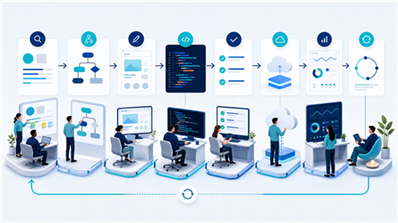

Our process stays transparent from discovery through delivery: shared decisions, working prototypes, documented feedback, and clear next steps.
What it means
Custom software development creates systems tailored to your exact operational model. If your business processes are unique, your integration map is complex, or your user journey needs precision, custom software development is often the only route that avoids compromise.
Instead of forcing your teams into generic workflows, custom software development allows your platform to reflect how your business actually functions. This improves adoption, removes operational friction, and creates better visibility for
The pattern is consistent: where processes are strategic, regulated, or unique, custom software development provides the control and specificity needed to operate effectively. Choosing custom software development is particularly common when regulatory compliance, IP protection or differentiated customer experiences are strategic priorities.
design, frontend and backend engineering, integrations, testing, deployment, analytics, and support. The value comes from how well those parts are connected, not just from the code itself.
Why enterprises choose it
Off-the-shelf tools often solve a general problem well enough, but they rarely fit the exact shape of a growing organization. Custom software development gives you the ability to model the way your team actually works, connect with the systems you already use, and remove the friction that slows people down every day.
For many clients, the biggest benefit is not the feature list. It is the way the software reduces manual coordination, prevents data duplication, improves visibility, and lets managers make decisions faster because the right information is available in one place.
Strong custom software development is not only about launch speed. It is about creating a dependable foundation that supports automation, reporting, service quality, and future innovation without constant platform rewrites.
Why it matters
A well-built custom platform does more than automate tasks. It can reshape how quickly a team responds to customers, how reliably data moves across departments, and how confidently leaders plan the next stage of growth.
When the software is designed around your actual operating model, the result is usually less rework, smoother onboarding, clearer accountability, and a product that feels like a real extension of the business instead of an external constraint.
Teams know where to work, what to do next, and which records are current because the platform is built around the way the business actually operates.
Customers interact with fewer steps, less confusion, and more reliable service because the software supports the experience you want to deliver.
Custom software development creates a foundation that can grow as your product, regulations, and internal workflows continue to change.
Built around your reality
Good custom software development starts with empathy. We spend time understanding how your field actually works, where the pressure points are, what your team struggles with, and which problems are costing you time or money every day. That means we do not build from assumptions. We study the real workflow, the real constraints, and the real outcome you need.
When we step into the client's world like that, the solution becomes more accurate. Features make more sense, the user experience feels natural, and the final software reflects the way people already think and work inside the business. That is how custom software development creates a better outcome: it solves the actual problem instead of just the surface symptom.
We ask practical questions, review the current process, identify the bottlenecks, and look at how data moves across the business. Then we translate that understanding into software decisions that feel precise instead of generic.
Quick links
These links point to the main custom software development areas on this page so visitors can quickly scan the direction that best fits their goals.
Our delivery model
We keep the process structured so clients always know what is being done, why it matters, and how it contributes to the final outcome. That balance of clarity and momentum is important because custom software development works best when the business and technical sides stay aligned.
We clarify the business case, stakeholders, user groups, systems that must connect, and the practical definition of success.
We define the solution architecture, milestones, data model, and release plan so the work has a strong technical backbone.
We develop the product in measurable increments, testing each layer as we go so quality is not left until the end.
We help your team launch safely, observe real usage, and keep improving the platform after release.
How engagement works
We do not rely on vague promises or oversized slide decks. Clients usually want to know how the collaboration works, what decisions they will need to make, and how much visibility they will have into the work. Our answer is straightforward: open communication, milestone reviews, and a clear path from idea to launch.
The process is collaborative, but it is not chaotic. We bring the technical structure, and you bring the business knowledge. Together we turn that into software that reflects real priorities instead of guessed assumptions.
We shape the problem carefully, identify the must-have outcomes, and understand what success should look like in the first release.
You receive progress updates, working increments, and practical feedback points instead of waiting until the end to see the product.
We stay available for support, optimization, and roadmap planning so the platform continues to improve after release.
Delivery principles
We define scope, milestones, and dependencies clearly so teams can make informed decisions without ambiguity.
We maintain code quality standards, architecture reviews, and test discipline throughout the custom software development lifecycle.
Every technical decision is evaluated against business outcomes, user experience, and long-term operational value.
Scope
Custom software development is a comprehensive, end-to-end process of identifying a business need, designing a tailored solution, and delivering working software that is supported and evolved over time. It covers discovery, UX and product design, architecture, engineering, testing, deployment, and ongoing maintenance.
At its core, custom software development emphasizes product thinking: focusing on measurable business outcomes, validating assumptions early with prototypes or MVPs, and iterating toward the features that drive real value.
Custom software development also implies a lifecycle commitment: after initial delivery the platform is monitored, maintained and enhanced. Successful programs plan for this operational phase as part of the overall delivery budget and timeline.
Successful custom software development balances speed-to-value with engineering discipline, delivering useful increments while maintaining a clean, extensible architecture.
Compare
Choosing between custom software development and off-the-shelf (COTS) solutions is a classic build vs buy decision. COTS can be deployed quickly and often at lower initial cost, but it may force process changes, limit integrations, and expose you to a vendor's roadmap.
Custom software development provides a precise fit: you control the data model, integrations, security posture, and product road map. The trade-off is higher upfront effort and responsibility for ongoing maintenance, though over time custom solutions can be more cost-effective because they eliminate manual workarounds and deliver unique competitive advantages.
When evaluating options, consider total cost of ownership (TCO) and the long-term roadmap: custom software development can be an investment that pays back through efficiency and differentiation, while off-the-shelf solutions may introduce recurring licensing and customisation costs.
Kinds
Custom software development produces many solution patterns. A few common types are:
Each type brings different non-functional needs: performance and scalability for commerce, auditability and validation for regulated domains, and flexible data modeling for enterprise reporting. When planning custom software development, select patterns and tools suited to the problem category rather than a one-size-fits-all architecture.
Focused custom software services
These live pages address distinct commercial needs. Additional CSV topics remain in the content roadmap until each can support original, useful content.
Improve operations, customer access, reporting, and connected workflows. A dedicated Business Web Application guide covers browser-specific decisions.
Explore business applications → Focused serviceScope access, evidence, integration, or security-operations software around explicit risks and responsibilities.
Explore security software →Where it applies
Custom software development is industry-agnostic; the difference is in the domain rules. Examples include:
The pattern is consistent: where processes are strategic, regulated, or unique, custom software development provides the control and specificity needed to operate effectively.
Cross-department value
Custom software development reduces friction across functional areas by providing shared data models, automated workflows, and role-specific interfaces. When teams no longer copy data between spreadsheets and systems, cycle times decrease and errors vanish.
Measurable outcomes typically include lower operational costs, fewer manual errors, faster customer response times, and clearer management reporting, all outcomes that justify investment in custom software development.
Advantages
Custom software development delivers several clear benefits:
Because the platform is built for your business, teams spend less time on manual work and more time on high-value activities. That shift improves productivity and can increase revenue while lowering avoidable costs.
How we build
While methodologies vary (Waterfall, Spiral, Agile), modern custom software development favors iterative, Agile approaches that deliver value quickly and validate assumptions continuously.
Good custom software development emphasizes early validation (PoCs/MVPs), measurable milestones, and a plan for long-term operations so the product remains sustainable.
Planning
Several pragmatic factors should shape any custom software development program:
Finally, budget for ongoing maintenance and prioritize a phased delivery plan that delivers business value early while keeping technical debt manageable.
Pitfalls
Common mistakes we help clients avoid during custom software development include:
Standards
Best practices for successful custom software development include:
Selecting a partner
When selecting a partner for custom software development, look for a company that balances domain empathy with engineering discipline and a product mindset:
Why PhaneLabs
PhaneLabs combines product thinking, domain empathy, and engineering discipline to deliver custom software development programs that produce measurable business results. We build with maintainability and operations in mind so solutions remain useful as your needs evolve.
Our teams deliver clear roadmaps, transparent estimates, and frequent demos so stakeholders always know progress and can steer the product. We remain available after launch to operate and optimize the platform.
FAQ
Most programs begin with a discovery and architecture phase, then move into milestone-based delivery. Timeline depends on scope, integrations, and complexity.
Yes. We assess your current platform and recommend the best route: modernization, phased replacement, or targeted rebuild.
Yes. Our custom software development engagements include continuous maintenance, optimization, and roadmap support.
Share your goals, constraints, and timeline. We will help you build a custom software development roadmap that is realistic, scalable, and built for measurable business impact.
Talk to Our TeamExplore more
Custom software services
Browse focused pages by operating context, business system, technology, or delivery decision. Each route is designed to help you connect a software choice to a practical business outcome.
44 focused guidesExplore software decisions shaped by a sector, service model, or operational environment.
Plan systems that support teams, structured workflows, reporting, and day-to-day operations.
Examine technology-specific routes only when the platform or engineering constraint matters to the outcome.
Clarify value, design, process, pricing, sourcing, and the team needed before committing to delivery.
Explore a distinct service topic that is useful enough to stand on its own.