Manage technical debt deliberately
Identify debt that affects reliability, security, delivery speed, or support effort, then address it in priority order before small weaknesses become expensive constraints.
Application maintenance by PhaneLabs
Reduce emergency fixes and give your team a clear way to handle defects, security updates, performance issues, dependency changes, and improvements as the business evolves.
PhaneLabs begins with an application health review, prioritizes risk and business impact, and agrees on a support model that matches the system’s real criticality. You receive documented work, visible priorities, and a healthier codebase over time.
Maintenance made visible
These editorial photographs illustrate engineering and monitoring contexts. They are not PhaneLabs personnel, a client environment, or evidence of a service-level result.

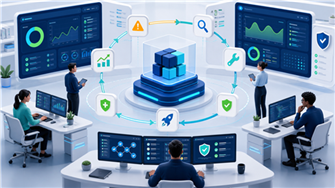
Maintenance stays accountable with visible system health, prioritized issues, documented release checks, and clear communication on every change.
What it means
Application maintenance at the enterprise level is fundamentally distinct from typical IT ticket troubleshooting. While standard support centers merely respond to localized bugs after they disturb operations, enterprise maintenance is a continuing engineering discipline designed to manage technical debt before it becomes a larger delivery or operational constraint.
It is the systematic process of managing software evolution. This may involve refactoring deprecated code, adapting to platform and cloud changes, tuning database indexes as usage grows, and reviewing technical controls against the requirements supplied by the client. Legal or regulatory compliance still requires qualified advisor and organizational review beyond software maintenance alone.
Whether your enterprise operates high-volume B2B automation systems, distributed logistical networks, or internal ERP setups, custom application maintenance can make proprietary codebases easier to understand, test, operate, and evolve while exposing the risks that still require investment or business decisions.
Why enterprises choose it
Relying on ad-hoc freelancers or overextended internal generalists to keep core digital assets alive creates fragmented documentation and highly volatile turnaround times. When critical backend issues present themselves, you cannot afford to waste hours finding a developer who lacks familiarity with your unique database schema or workflow patterns.
Our maintenance approach is designed to preserve context and make responsibility visible. We inspect and document the architecture in scope, record unknowns, and diagnose issues from available evidence. Where an urgent mitigation is necessary, we distinguish it from the deeper remediation and document the follow-up work.
A defined maintenance backlog can reduce the number of unplanned interruptions competing with product work. Internal teams retain visibility while routine upgrades, defects, and regression checks are handled through an agreed process.
Why it matters
Consistent maintenance cannot eliminate every incident, but it can reduce avoidable risk, preserve software value, and make future changes easier to plan and test.
Identify debt that affects reliability, security, delivery speed, or support effort, then address it in priority order before small weaknesses become expensive constraints.
Database indexing, cache adjustments, and environment tuning are selected from measured bottlenecks. Changes are compared with an agreed baseline so performance gains, and unresolved constraints, are visible without promising a universal peak speed.
Patch review, dependency checks, access-control changes, and cryptography updates can support a client's security program. Applicable obligations, risk acceptance, validation, and advisor review remain client-specific; maintenance alone cannot guarantee compliance or prevent every incident.
Built around your reality
Premium application support requires an intimate knowledge of your organizational timelines. Before assigning our engineering squads, we map out your exact operational peak windows. Are your procurement engines hammered at midnight? Do your field teams pull heavy database queries at the crack of dawn? Are your financial reconciliations strictly concentrated at the final week of the quarter?
We do not execute random, disruptive production code pushes. We synchronize our maintenance sprints, staging environment migrations, and planned server updates within appropriate change windows. The release plan includes validation and rollback because no production update should be described as risk-free or invisible by default.
We agree what telemetry may be collected, map known dependent endpoints, and establish an appropriate test environment. Each change follows the contracted review and test path before production, while residual risks and untested dependencies are documented explicitly.
Quick links
These links isolate the critical pillars of our software preservation capabilities so you can rapidly evaluate the precise operational direction your infrastructure requires.
Our delivery model
The onboarding plan gathers available context without assuming the system is fully documented. Repositories, environments, dependencies, access, known incidents, and decision owners are reviewed in phases; gaps and client actions remain visible throughout the handover.
We inspect the repositories and environments made available, map known architectural dependencies and operational risks, and establish an initial documentation baseline with explicit gaps.
Subject to access, privacy, and infrastructure constraints, we prepare a separated test environment and agree on telemetry that can establish useful baseline behavior without exposing live data.
We work through the agreed priorities: investigating historical defects, reviewing dependencies, improving documentation, and making the deployment path more observable and repeatable. Scope and evidence determine what can be stabilized in each cycle.
We move into the agreed coverage model for monitoring review, incident handling, minor improvements, dependency work, and recurring health reporting.
How engagement works
Corporate decision-makers need defined visibility into spend, technical decisions, risks, and work performed. Reporting fields, review cadence, repositories, and approval responsibilities are agreed so leadership can see what is known, pending, or blocked.
We define tailored service indicators and severity levels. Where an SLA applies, response targets, coverage, dependencies, and exclusions are recorded in the contract; they are not described as immutable guarantees outside those terms.
We replace vague status language with the reporting agreed for the engagement, which may include health indicators, active work, patch notes, decisions, blockers, and itemized time records.
Where roadmap support is included, reviews can identify when third-party updates, measured capacity limits, or operating changes justify architecture work. Recommendations are prioritised against evidence, risk, budget, and the product roadmap.
Trust and outcomes
The review and test path is agreed for each change category. Code review, automated checks, staging evidence, and documented exceptions support maintainability without claiming that any codebase or patch can be perfectly clean.
We assess the languages, frameworks, databases, infrastructure, and legacy constraints before accepting responsibility. Skill gaps, specialist dependencies, and access constraints are surfaced in the maintenance plan rather than hidden behind broad expertise claims.
Where resilience work is in scope, we identify material failure modes and define backup, restore, rollback, redundancy, and recovery-test requirements. No architecture is failure-proof; recovery objectives and residual risks must be agreed and tested.
Scope
True software maintenance extends significantly past responding when an interface crashes. It is the comprehensive, multi-front orchestration of code health preservation. It incorporates active framework update monitoring, routine security permission reviews, third-party library dependency health mapping, and persistent API version synchronization to prevent external deprecations from fragmenting your backend logic.
An enterprise-scale upkeep assignment calls for highly structured load testing to track runtime memory consumption trends, log size regulation, indexing tweaks to stop database queries from slowing down with age, and the maintenance of modern CI/CD deployment channels. Ultimately, it represents an intentional investment to safeguard your codebases against performance decay and structural obsolescence.
Compare
The critical philosophical choice is deciding how your business handles software vulnerabilities.
Reactive "Break-Fix" IT Support: A break-fix model prioritizes response after a defect is reported. It may cost less up front, but limited preventive work can increase uncertainty around dependencies, incident recovery, user disruption, and overdue controls. The actual financial or regulatory exposure is specific to the system and should be assessed by the responsible teams.
Proactive Maintenance Engineering (The PhaneLabs Approach): This modern structural technique treats your proprietary code as a living, changing asset. Where appropriate, telemetry, resource trends, dependency review, and preventive tests can expose issues earlier. This can reduce avoidable risk and improve planning, but incidents and long-term costs remain dependent on architecture, usage, scope, and decisions outside the maintenance team's control.
The aim is to make foreseeable failure modes visible and give the team tested response options before an incident occurs.
Kinds
We structure distinct engineering work tracks to target specific technical lifecycle priorities:
Where it applies
Disciplined application engineering preserves operational integrity across the most demanding industries:
Cross-department value
Failing application infrastructure ripples across an entire corporate ladder. Professional maintenance solves this by keeping core code assets operating reliably for business stakeholders group.
Advantages
Treating maintenance as an ongoing strategic asset directly shapes enterprise enterprise equity and agility:
How we build
Maintaining complex software environments calls for explicit change, test, release, and recovery discipline:
Planning
To reduce uncertainty during the support handover, we map out several core parameters during onboarding:
Pitfalls
A maintenance plan should make common software risks visible and assign proportionate actions:
Standards
The maintenance plan selects structural practices according to the codebase, risks, budget, and expected change horizon:
Selecting a partner
Entrusting your core digital property to an external engineering firm requires careful evaluation. Look for evidence that matches the application, risk, and support model:
Why PhaneLabs
PhaneLabs treats maintenance as planned engineering work with visible priorities, responsibilities, evidence, and tradeoffs. The assigned team and review requirements are confirmed for the actual stack and risk profile before work begins.
Whether the scope is a legacy ERP, a web platform, or an automated B2B workflow, discovery establishes what can be supported responsibly. The resulting plan can include itemized work records, agreed reviews, test evidence, and scaling checks without promising uninterrupted operation or permanent durability.
FAQ
We combine repository review, runtime observation, deployment and dependency mapping, stakeholder interviews, and small verified changes. Unknowns are recorded explicitly; undocumented systems should not be approached with guarantees of complete context.
Response targets, coverage hours, severity definitions, escalation, communication, dependencies, and client responsibilities are agreed for each engagement. We do not publish a response time that has not been contracted for that system.
Ownership, repository access, third-party licenses, and handover obligations are defined in the project agreement. We work in the agreed repositories and document the changes made.
Start with a high-level system review, known-risk discussion, and an operating model that defines coverage, responsibilities, evidence, and any contractual SLA targets appropriate to the application.
Initiate Code AuditExplore more
Application maintenance
This page is the complete maintenance destination, covering stabilisation, improvement, support planning, and long-term ownership without creating artificial subpages.
0 focused guides