Operational clarity
Role-specific views can surface current operational state and the next required action. Data freshness, authorization, and usability are defined and tested for each workflow.
Web application development by PhaneLabs
Turn a slow workflow, fragmented customer journey, or spreadsheet- driven process into one secure web application that works on any modern browser, without asking users to install software.
PhaneLabs plans the user experience, connects the right systems, builds the application, and supports it after release. Every choice is tied to adoption, operating efficiency, security, or growth.
Plan the experience, then test the workflow
PhaneLabs designs web applications around the people who use them and the outcomes the business needs. We connect every interface decision to a real workflow, then review and refine it with your team.
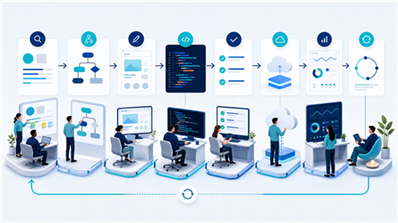

You see tangible progress throughout the engagement through working prototypes, structured reviews, tested releases, and documented decisions.
What it means
Web application development is the engineering of dynamic, secure cloud systems tailored to your exact operational model. While standard websites merely display static information, web applications can support transactions, governed data access, and complex business logic through a browser. Capacity and security are architecture and validation goals, not automatic properties of a web application.
If your business processes are unique, your cross-platform integration map is complex, or your user journey requires a close operational fit, custom web application development may provide more control than a packaged product. Instead of forcing your workforce into the rigid workflows of generic software, a bespoke web application allows your platform to reflect how your business actually functions. That fit can reduce daily friction and improve operational visibility, but adoption and business impact still need to be measured with real users.
The pattern is consistent across the B2B landscape: where systems must run smoothly on any device, remain highly secure, and integrate deeply with existing legacy databases, custom web application development provides the structural control needed to operate effectively.
Why enterprises choose it
Off-the-shelf systems can be the right choice when their workflow, integration, ownership, and pricing model fit. Custom development is worth considering when material gaps remain and leadership needs more control over workflows, data models, integrations, or priorities.
Custom web application development gives you the power to model systems around priority workflows and approved integrations. The long-term return is not just the feature list: depending on scope, an application can centralize processing, reduce double entry, apply role-based access, and present current management information. Each outcome needs a baseline, owner, and measurement plan.
Rigorous web application development is focused on far more than immediate launch speeds. It is about creating a dependable, proprietary cloud foundation that your business actually owns, supporting automated background workers, seamless API growth, and future product features without constant structural rewrites.
Why it matters
A well-built enterprise web application does more than run inside a browser window. It can improve how support agents find context, how transaction records move between approved systems, and how technical teams observe and respond to changing demand.
When software is designed around the operating model, teams can test whether it reduces manual adjustments and administrative effort while producing useful change and decision records. Those benefits should be demonstrated against the current process rather than assumed.
Role-specific views can surface current operational state and the next required action. Data freshness, authorization, and usability are defined and tested for each workflow.
Users encounter lightning-fast page loads, clean intuitive user journeys, and highly responsive portals that run seamlessly across laptops, tablets, and smartphones.
Custom web application development provides a highly modular frontend and backend foundation that easily accommodates changing data regulations and new feature integrations without breaking existing code.
Built around your reality
Exceptional web application development starts with profound operational empathy. Before we architect a database or map out a single interface component, we spend time studying how your field actually works. We identify where the manual bottlenecks hide, what data fields your staff handles daily, and which technical slow-downs drag your revenue down. We do not build from loose guesses or generic templates. We analyze the real web workflow, the server constraints, and the precise business outcomes you require.
When we align our engineering directly with the client's world, the final browser solution becomes exceptionally natural. Features fit intuitive mental models, database schemas map cleanly to regular operational reporting, and the final application matches your real operating needs closely.
We ask highly practical questions, audit your existing application flows, identify data translation bottlenecks, and evaluate how securely files move across your network. Then, we translate that understanding into architecture options with explicit tradeoffs, constraints, and acceptance criteria for your enterprise.
Quick links
These links point to the main web application development areas on this page so visitors can quickly scan the direction that best fits their goals.
Our delivery model
We keep our deployment pipeline highly structured and agile so clients maintain clear visibility into what is being written, why it matters, and how it pushes the project toward launch. This balance of code clarity and momentum is vital because web application development works best when frontend interaction design and backend databases stay aligned with business goals.
We clarify the business case, stakeholders, user groups, systems that must connect, and the practical definition of success.
We map robust relational database structures, model secure API endpoints, select the optimal web framework stack, and finalize the incremental development sprint schedules.
We develop the responsive user interface and cloud backend in reviewable increments. Automated checks and planned human review begin during delivery, with coverage and exceptions made visible before release.
We plan the launch with validation and rollback appropriate to the migration risk, then monitor performance and improve the infrastructure using production evidence.
How engagement works
Corporate stakeholders want to know exactly how the day-to-day coordination flows, what design decisions they need to evaluate, and how much clear visibility they maintain over the codebase. We do not operate on vague timelines or rely on static, theoretical presentation mockups. Our operational answer is straightforward: agreed communication channels, regular staging reviews, and a roadmap that is updated when evidence, dependencies, or priorities change.
We define the exact data inputs, isolate structural user management constraints, and pinpoint the specific features required for a highly impactful initial release.
Your team receives regular functional builds, interactive staging links, and structured feedback windows rather than waiting until final deployment to evaluate the interface.
If post-launch support is included, the operating plan can cover patch review, measured database tuning, infrastructure changes, incident responsibilities, and roadmap decisions as usage evolves.
Trust and outcomes
We outline technical dependencies, API integration tracks, and operational milestones up front so managers can make execution choices without guesswork or ambiguity.
We define code-review, automated-check, security-review, and exception-handling gates appropriate to the application's risk and delivery stage, with evidence available at agreed milestones.
Every server protocol choice, database query optimization, and UI structure is evaluated against business outcomes, page load performance, and long-term cloud hosting budgets.
Scope
Web application development is a comprehensive, end-to-end engineering process. It covers identifying a systemic business need, designing a tailored cloud solution, and delivering working software that is actively supported and evolved over time. It encompasses user research, UI/UX layouts, complex data architecture, security hardening, continuous integration/continuous deployment (CI/CD) pipelines, and system maintenance.
At its core, premium web application development relies on deep product thinking. It focuses on measurable performance metrics, validating code scaling assumptions early with functional MVPs (Minimum Viable Products), and directing development energy on the components intended to reduce the specific bottlenecks identified in discovery and measured after release.
It also implies a full lifecycle operational commitment. After the system is launched publicly, its cloud servers, security patches, data traffic pipelines, and third-party API hookups must be actively monitored. Successful web application development balances immediate speed-to-value with modern engineering discipline, delivering fast browser prototypes while ensuring the underlying full-stack system architecture remains modular, clean, and extensible.
Compare
Choosing between bespoke web application development and pre-packaged Commercial Off-The-Shelf (COTS) software represents a foundational build-vs-buy decision. Commercial products can be deployed quickly and often require less initial capital, but they may force your staff to adjust their operational habits, limit complex database connections, and bind your corporate future to an external vendor's roadmap.
Custom web application development can provide a closer operational fit and more control over data models, infrastructure settings, security profiles, and priorities. The trade-off is greater up-front design and delivery responsibility. Its value should be compared with the real cost of current workarounds, licenses, and constraints.
When evaluating options, consider total cost of ownership (TCO) and the long-term roadmap: web application development can be an investment that pays back through efficiency and differentiation, while off-the-shelf solutions may introduce recurring licensing and customisation costs.
Kinds
Web application development yields distinct solution architectures depending on core business objectives. A few common high-demand patterns include:
Each type brings different non-functional needs: performance and scalability for commerce, auditability and validation for regulated domains, and flexible data modeling for enterprise reporting. When planning web application development, select patterns and tools suited to the problem category rather than a one-size-fits-all architecture.
Focused web application services
These focused pages explore distinct web products and planning decisions. Each one addresses a distinct audience, set of constraints, and project intent instead of repeating the same generic service copy.
Explore controlled customer journeys, auditability, security, data handling, and regulated financial workflows.
Explore banking web applications → Focused serviceUnderstand how users, workflows, integrations, data, risk, and long-term ownership shape a responsible estimate.
Explore web application cost → Focused servicePlan a cloud web product around access, resilience, observability, operating responsibility, and controlled growth.
Explore cloud web applications →Where it applies
Web application development is structurally industry-agnostic; the unique differentiation lies within identifying and hardcoding your specific business domain logic and regulatory boundaries:
The pattern is consistent: where processes are strategic, regulated, or unique, web application development provides the control and specificity needed to operate effectively.
Cross-department value
Custom web applications minimize operational friction across separate corporate areas by providing unified cloud data layers, automated event triggers, and role-specific user interfaces. When your staff no longer spends hours manually copy-pasting raw text between unlinked systems and spreadsheets, cycle time and transcription errors may decrease. The size of that change depends on adoption, integration quality, and the workflow baseline.
Measurable outcomes typically include lower operational costs, fewer manual errors, faster customer response times, and clearer management reporting, all outcomes that justify investment in web application development.
Advantages
Investing in custom web application development provides distinct competitive advantages that directly influence enterprise valuation:
Because the platform is built for your business, teams spend less time on manual work and more time on high-value activities. That shift improves productivity and can increase revenue while lowering avoidable costs.
How we build
Building high-performance web software demands a rigorous, repeatable engineering methodology. Modern web application development favors iterative, Agile approaches that deliver value quickly and validate assumptions continuously.
Good custom web application development emphasizes early validation (PoCs/MVPs), measurable milestones, and a plan for long-term operations so the product remains sustainable.
Planning
Several factors should shape the program early to expose delivery, operational, and assurance risks:
Finally, budget for ongoing maintenance and prioritize a phased delivery plan that delivers business value early while keeping technical debt manageable.
Pitfalls
Common development errors we actively protect our engineering clients from include:
Standards
Industry-standard core practices integrated across all PhaneLabs web pipelines include:
Selecting a partner
Choosing a technical partner is a consequential part of a web application build. Look for evidence that matches the product, operating model, and delivery risk:
Why PhaneLabs
PhaneLabs approaches web application work through product discovery, architecture tradeoffs, iterative delivery, and measurable acceptance criteria. A school-management workflow, logistics dashboard, or other B2B product is assessed against its users, integrations, data risks, operating owner, and evidence of value before scope is recommended.
Maintainability, security, accessibility, and adoption are translated into explicit requirements and review points rather than treated as guaranteed outcomes. The engagement defines roadmap updates, milestone estimates, staging reviews, decision owners, and the risks that remain outside the delivery team's control.
FAQ
A responsible estimate follows discovery of the workflow, data, integrations, assurance needs, team, and release constraints. A small validated slice may be delivered before the full product, but this page does not promise a universal launch window.
Yes. Our engineering architecture teams will audit your existing codebase and platform to determine the cleanest strategic path: modernizing legacy backend frameworks, deploying new secure APIs, or executing a structured, phase-by-phase replacement.
Post-launch support is available when it is included in the project agreement. Coverage, response targets, monitoring, patch ownership, infrastructure responsibilities, and roadmap cadence are scoped for the application rather than implied as an unlimited default.
Share your goals, constraints, and timeline. We will help you build a custom web application development roadmap that is realistic, scalable, and built for measurable business impact.
Talk to Our TeamExplore more
Web application services
Use the focused pages to connect a web product’s operating context, security needs, architecture, team, tooling, and investment decisions to the result you need.
11 focused guidesStart with the type of product, users, and operating environment the web application must support.
Clarify cost, delivery responsibility, technical choices, and the questions to answer before implementation.